Tractor Beacon Lights in New Zealand: Legal Requirements and Mounting Options
In this guide
- What Are Tractor Beacon Lights
- New Zealand Legal Requirements for Tractor Beacon Lights
- When Must a Tractor Beacon Be On
- Tractor Beacon Light Specifications
- Types of Tractor Beacon Light
- Mounting Options for Tractor Beacon Lights
- ECE R65 Approval and R10 EMC Compliance
- How to Choose the Right Tractor Beacon Light
- Maintaining Tractor Beacon Lights
- Summary
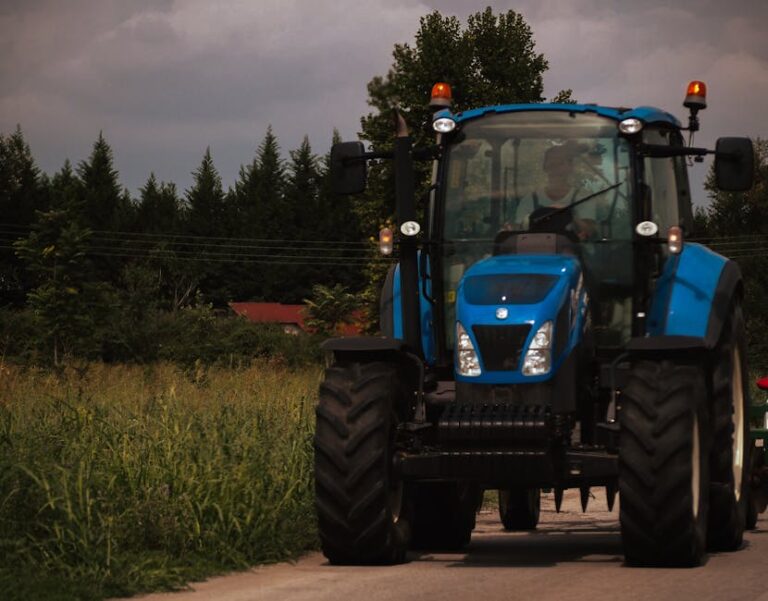
A tractor beacon light is an amber warning device fitted to the roof or roll bar of an agricultural tractor to alert other road users that the vehicle is slow-moving, wide, or both. In New Zealand, amber warning lamps are required on agricultural vehicles in various situations, such as oversize or slow-moving operation, and many farmers run one on every road trip. Choosing the wrong type or mounting position can leave a tractor non-compliant. This article covers the New Zealand legal requirements for tractor beacon lights, the specifications a beacon must meet, the different beacon types available, the four main mounting options, the approval markings to look for, and how to select the right beacon for a particular tractor setup.
For the broader picture of all lights required on a tractor, see the guide to tractor lighting.
What Are Tractor Beacon Lights
A tractor beacon light is a flashing or rotating amber lamp designed to provide 360-degree visibility to approaching traffic from all directions. Its primary function is to warn other road users that an agricultural vehicle is travelling well below the normal speed of traffic or occupying more of the road than a standard vehicle.
Tractor beacon lights differ from headlights, tail lights, and work lights in both purpose and legal status. Headlights and tail lights light the road ahead or mark the vehicle’s position. Work lights light the ground around the tractor for field operations. A tractor beacon light does neither. It exists solely as a warning signal, drawing attention to the presence of a slow or oversized vehicle that other drivers need to account for.
The amber colour is significant. In New Zealand, red and blue flashing lamps are reserved for emergency services such as Police, fire and ambulance. Amber warning lamps are for vehicles such as agricultural vehicles, tow trucks, road works vehicles and other vehicles that are slow, oversize or working on the road. A farm vehicle should never use red or blue. For a full breakdown of what each beacon colour signals, see amber beacon meaning.
New Zealand Legal Requirements for Tractor Beacon Lights
Tractor beacon lights in New Zealand are governed by the Land Transport Rule: Vehicle Lighting 2004, administered by NZ Transport Agency Waka Kotahi (NZTA). Two points matter most:
-
When a beacon is required. The Vehicle Lighting Rule and NZTA’s agricultural vehicle guidance require amber warning lamps on agricultural vehicles in various situations, such as when the vehicle is oversize or is operating slowly on the road. The exact trigger depends on the machine’s width, speed and use.
-
How the beacon is fitted. The NZTA agricultural vehicles guidance brings together the lighting, width and speed provisions for farm machinery, including where warning lamps must be visible from. Check it for the exact requirement for your machine.
This is different from the UK, where a tractor beacon is only compulsory for slow vehicles on fast dual carriageways and is otherwise optional. UK advice about beacons does not carry across to New Zealand, so check the NZ rules.
A tractor used only on the farm, on fields and private farm roads with no public access, is outside the road rules, but the moment it enters a public road the lighting rules apply in full. For a complete overview of all lighting laws that affect tractors, see tractor lighting regulations.
A tractor beacon light does not confer any right of way. Other road users are not obliged to stop or give way to a vehicle displaying an amber beacon. The beacon is a warning, not an instruction.
When Must a Tractor Beacon Be On
In New Zealand the answer depends on the machine and how it is being used, so check NZTA Waka Kotahi’s agricultural vehicle guidance for the exact requirement for your machine. The main situations are:
-
Oversize machines. Agricultural vehicles wider than the standard width limit are treated as oversize, and amber warning lamps are part of the requirements, along with other measures as width increases.
-
Slow-moving operation. A tractor travelling well below the speed of other traffic is a hazard on fast rural roads and state highways, and warning lamps are required in various slow-moving situations.
-
Very wide self-propelled machines. The widest machines may also need hazard panels, pilot vehicles or limits on when they can travel.
Short runs count. Carting silage a few hundred metres along the road between paddocks is still use on a public road, so if your machine needs a beacon, it goes on at the gate and stays on until you are back off the road. Many farmers switch it on for every road trip, required or not.
Tractor Beacon Light Specifications
The Vehicle Lighting Rule and NZTA’s guidance set the requirements for warning lamps. The practical specifications to aim for are below; check NZTA’s current guidance for any exact figures that apply to your machine.
Position. Where possible, mount the beacon on the roof, on the vehicle’s longitudinal (centre) axis. On most tractors that means a single beacon in the middle of the cab roof.
Mounting height. Mount it high enough to be seen over the tractor and any load. On most tractors, mounting the beacon on the cab roof or the top of the roll bar does this with plenty of margin. A beacon mounted on a mudguard or at bonnet height will not.
Standard. Use a lamp built to a recognised standard such as ECE R65, which covers light output and flash rate.
Power. A traditional rotating halogen beacon with an H1 55W bulb draws several amps. LED beacons give the same warning for a fraction of the current.
Visibility. The beacon must flash, and in practice it needs to be seen from all round the tractor. If an exhaust stack, air intake, raised implement or high trailer hides a single beacon from part of the circle, fit a second beacon so that together they cover every approach angle.
The beacon must emit amber light. No other colour is permitted for agricultural vehicles on New Zealand roads.
Types of Tractor Beacon Light
Tractor beacon lights fall into three main technology categories: rotating halogen, LED strobe, and LED rotating. Each type produces a flashing amber signal but differs in power draw, lifespan, flash pattern, and visibility characteristics.
Comparison Table
| Feature | Rotating Halogen | LED Strobe | LED Rotating |
|---|---|---|---|
| Light source | Halogen bulb with rotating reflector | Fixed LEDs, electronic flash | LEDs on rotating module or simulated rotation |
| Flash rate | 60 to 160 flashes/min (mechanical) | 60 to 240 flashes/min (electronic) | 60 to 240 flashes/min (electronic or mechanical) |
| Power draw | 55W typical | 3W to 15W | 8W to 20W |
| Lifespan | 1,000 to 2,000 hours | 30,000 to 50,000 hours | 30,000 to 50,000 hours |
| Vibration resistance | Low (filament and motor) | High (no moving parts) | Medium to high |
| Typical price range | Low (from around NZ$25) | Medium (roughly NZ$35 to NZ$120) | Medium to high (roughly NZ$60 to NZ$190) |
Rotating Halogen Beacons
A rotating halogen tractor beacon uses a halogen bulb (typically H1 55W) behind a parabolic reflector that spins on an electric motor. The rotating reflector throws a beam of light in a sweeping circle, creating the familiar “revolving” pattern. Rotating halogen beacons are the traditional choice and cost less than LED alternatives. The main drawbacks are power draw, at around 55W, and a shorter lifespan. The halogen bulb lasts around 1,000 to 2,000 hours, and the rotating motor is a mechanical wear point. If the beacon is on for every road journey, bulb failures come round quickly.
LED Strobe Beacons
An LED strobe tractor beacon uses an array of fixed LEDs that flash in rapid sequence, with no moving parts. LED strobe beacons draw between 3W and 15W (compared to 55W for a halogen), last 30,000 to 50,000 hours, and resist vibration far better than any halogen unit. The flash pattern is electronically controlled and often selectable between multiple modes (steady flash, alternating, quad flash). LED strobe beacons produce an intense, sharp flash that is highly visible in daylight. The absence of moving parts makes them the most reliable option for tractors working in rough conditions.
LED Rotating Beacons
An LED rotating tractor beacon combines LED technology with a rotating visual effect. Some units achieve this mechanically (LEDs mounted on a spinning platform). Others simulate the rotation electronically by firing LEDs in sequence around the housing. The result is an amber beacon that looks like a traditional rotating beacon but draws far less power and lasts far longer. LED rotating beacons suit operators who prefer the sweeping appearance of a traditional beacon but want the reliability and efficiency of LED.
Mounting Options for Tractor Beacon Lights
Tractor beacon lights attach to the tractor using one of four main mounting methods. The right choice depends on the tractor’s design, whether the beacon needs to be removable, and how much vibration the mount will face. Whichever you choose, aim for the roof centre line, high enough to be seen from all round.
DIN Pole Mount
A DIN pole mount is the most common fitting on modern tractors. The beacon sits on a rigid metal pole (typically 100 mm to 300 mm tall) that slots into a standard DIN-size spigot socket already present on most tractor cab roofs. The DIN spigot provides both a mechanical connection and an electrical feed, so no separate wiring is needed once the socket is installed.
Pros: Clean factory-fit appearance. Quick to install and remove. Electrical connection through the spigot. No drilling if the tractor already has a DIN socket.
Cons: Rigid pole transmits vibration directly to the beacon. Not suitable for tractors without a DIN socket unless one is retrofitted.
Flexi DIN Mount
A flexi DIN mount uses the same standard DIN spigot base but replaces the rigid pole with a flexible rubber or spring-loaded pole. The flexibility absorbs impacts from low branches, doorways, and shed entrances, allowing the pole to bend and return to upright rather than snapping or damaging the beacon.
Pros: Absorbs impacts. Reduces beacon damage in yard and field environments. Same DIN base as rigid pole. Quick to swap.
Cons: Slightly more expensive than rigid poles. The flexible section can wear over time and may need replacement. Some flex mounts vibrate more at road speed, which can slightly reduce beacon visibility.
Magnetic Mount
A magnetic tractor beacon sits on a powerful magnet base that clamps onto any flat steel surface, typically the cab roof. Magnetic mounts require no drilling, no wiring loom modification, and no permanent attachment. The power cable runs through the cab door seal to a cigarette lighter socket or direct battery connection.
Pros: Fully removable in seconds. No drilling or permanent modification. Ideal for shared tractors, hired machines, or operators who move one beacon between vehicles.
Cons: Can slide or detach at speed if the roof surface is dirty, wet, or painted with thick coatings. Power cable routing through the door seal can look untidy and may pinch over time. Not as secure as a permanent mount in heavy vibration. If the beacon goes on for every road journey, a permanent mount is usually the better long-term choice on a tractor that is regularly on the road.
Permanent Bolt-On Mount
A bolt-on tractor beacon light fixes directly to the cab roof, roll bar, or ROPS frame with bolts, screws, or a bracket. This is the strongest and most vibration-resistant mounting method.
Pros: Most secure attachment. No movement or risk of detachment. Clean wiring routed through the cab structure. Suits any tractor that regularly needs a beacon on the road.
Cons: Requires drilling holes in the cab or ROPS frame. Permanent modification. Not practical if the beacon needs to move between vehicles. Holes must be sealed to keep water out of the cab.
ECE R65 Approval and R10 EMC Compliance
ECE R65 is the United Nations regulation that governs the approval of warning beacons. A tractor beacon light carrying the ECE R65 marking has been tested and certified for light output, flash rate, colour, and visibility angle by an approved testing authority. New Zealand accepts lamps that meet a recognised standard, and UN ECE (E-mark) approval is one of them, so an R65 beacon gives independent proof of its light output and flash rate.
How to Check for ECE R65 Approval
The ECE R65 approval mark appears on the beacon lens or base as a capital E in a circle with a number identifying the country that granted the approval (E1 is Germany, E4 the Netherlands, E11 the United Kingdom), followed by the approval number and a code for the category, colour and class, such as TA1 or TA2 (T for an all-round beacon, A for amber, 1 or 2 for the class). UN ECE approvals from any of these countries are accepted in New Zealand. If the beacon has no E-mark with this code, it is not R65 approved.
R10 EMC Compliance
ECE R10 covers electromagnetic compatibility (EMC). A tractor beacon light with R10 approval has been tested to confirm it does not emit electromagnetic interference that could disrupt the tractor’s electronic systems. This matters on modern tractors equipped with GPS guidance, auto-steer, yield monitors, ISOBUS implements, and other precision agriculture electronics. A cheap beacon without R10 compliance can introduce interference that affects GPS accuracy or causes error messages on the tractor’s terminal.
The R10 marking appears alongside the R65 marking on the beacon lens or base, typically as “E[number] 10R” followed by an approval number.
A beacon carrying both R65 and R10 markings gives verified performance and interference-free running, which is worth having on a lamp that may run on every road journey.
How to Choose the Right Tractor Beacon Light
Selecting the right tractor beacon light depends on three factors: the beacon technology, the mounting method, and the tractor’s electrical and physical setup.
Modern Tractor with Factory DIN Socket
A tractor built in the last 15 to 20 years from manufacturers such as John Deere, New Holland, Massey Ferguson, Case IH, or Fendt will almost certainly have a DIN spigot socket on the cab roof. The best combination for these tractors is an LED strobe or LED rotating beacon on a DIN pole mount (rigid or flexi). The DIN connection handles both mounting and power. Choose a flexi pole if the tractor regularly enters low sheds or works under trees.
Older Tractor Without DIN Socket
An older tractor without a factory DIN socket suits either a permanent bolt-on beacon or a magnetic beacon. A bolt-on mount with direct wiring to the tractor’s lighting circuit provides the most reliable installation. A magnetic beacon works if the cab roof offers a flat steel surface and the operator prefers a non-permanent option.
Shared or Hired Equipment
A magnetic tractor beacon is the practical choice when one beacon needs to serve multiple vehicles. Keep the beacon in the cab and place it on the roof before each road journey. Check that the magnetic base is clean and dry before attaching.
High-Vibration Environments
LED strobe beacons outperform all other types in high-vibration applications because they have no filament to break and no motor to wear. A tractor that spends hours on rough tracks between fields, or a beacon mounted on a roll bar with significant vibration transfer, will get far longer service from an LED strobe than from a rotating halogen.
Budget Considerations
Rotating halogen beacons remain the lowest-cost option at roughly NZ$25 to NZ$45 for a basic unit, but expect higher current draw and more bulb changes. LED strobe beacons start from roughly NZ$35 for entry-level models and reach NZ$120 or more for multi-pattern, high-output units. LED rotating beacons typically cost roughly NZ$60 to NZ$190. If the beacon runs on every road journey, an LED beacon (purchase price plus no bulb replacements) usually works out cheaper over three years than a halogen beacon (lower purchase price plus several bulb replacements plus the downtime to change them).
Browse the current range of tractor beacons at Agri Lighting for DIN-mount, magnetic, and bolt-on options, shipped from the UK with free delivery to New Zealand on orders over NZ$500. Prices are in NZ dollars, and any NZ GST, duty or Customs fees are paid on delivery.
Maintaining Tractor Beacon Lights
Regular checks keep a tractor beacon light visible, compliant, and reliable across seasons of road and field use.
Clean the lens. Dust, mud, and crop residue build up on the beacon lens and reduce light output. Clean the lens with warm soapy water and a soft cloth. Avoid solvents, thinners, or abrasive cleaners, which can cloud or scratch the polycarbonate lens and reduce 360-degree visibility.
Check mounting security. Vibration loosens bolts and DIN pole connections over time. Before each road journey, confirm the beacon sits firmly in its mount. A beacon that falls from the cab roof at road speed is a hazard, and the tractor is then on the road without a beacon it may legally need.
Inspect wiring and connectors. Corroded connectors and chafed wires are the most common cause of a tractor beacon failing to operate. Check the connector where the beacon plugs into the DIN socket or wiring loom. Look for green corrosion on the terminals, cracked insulation on the cable, and any exposed copper. Apply dielectric grease to connectors to keep moisture out.
Test flash rate and operation. Switch the beacon on before each road journey and confirm it flashes at a steady, even rate. An LED beacon that flashes erratically or at a noticeably different speed may have a failing driver circuit. A rotating halogen beacon that spins unevenly or makes grinding noises has a motor bearing issue and needs replacement.
Replace halogen bulbs proactively. Halogen bulbs dim as they age. Replace the bulb at the first sign of reduced brightness rather than waiting for complete failure, and carry a spare in the cab. On LED beacons, individual LED failure is rare, but if one or more LEDs in the array stop working, the beacon’s light output drops and its 360-degree coverage may be compromised. Replace the beacon if LEDs fail.
Check rubber seals. Weatherproof tractor beacon lights rely on rubber gaskets and O-rings to keep moisture out. Inspect these seals annually. A cracked or perished seal allows water into the beacon housing, which corrodes the reflector, shorts the bulb holder, and fogs the lens from the inside.
Summary
In New Zealand amber warning lamps are a legal requirement on agricultural vehicles in various situations, such as oversize or slow-moving operation, and a sensible fit on any tractor that uses the road. The beacon must be amber, mounted on the roof on the centre line where possible, high enough to be seen from all round. Check NZTA Waka Kotahi’s agricultural vehicle guidance for the exact requirement for your machine. Add a second beacon if a load or implement hides the first. LED beacons (strobe or rotating) offer longer life, lower power draw and better vibration resistance. DIN pole mounts suit modern tractors, flexi poles add impact absorption, magnetic mounts work for shared vehicles, and bolt-on mounts provide the strongest permanent attachment. Check for ECE R65 and R10 approval markings as a sign of a quality beacon before purchasing.
Browse the full range of tractor beacons at Agri Lighting for ECE R65 approved beacons, shipped from Lincolnshire in the UK with free delivery to New Zealand on orders over NZ$500 (prices in NZ dollars; any NZ GST, duty or Customs fees are paid on delivery). For fitment advice, call +44 1522 440522 or email [email protected].